


Key Takeaways
- A custom crate is a structural system designed to “float” artwork, isolating it from road vibration, shock, and torque.
- Crate design changes based on distance, from open-faced Travel Frames for local NYC shuttles to sealed crates for international air freight.
- Professional custom crating is often a prerequisite for All-Risk insurance coverage; self-packed items (PBO) are frequently limited to Total Loss Only.
- Arrow Express uses screw closures to allow for multiple uses and integrates high-quality structural off-cuts to minimize timber waste.
When a collector or gallery commissions a shipment, the crate often looks like a simple wooden box. Inside that shell, however, lies a complex system of engineering designed to isolate the object from the chaotic forces of the road. At Arrow Express, we view crating as a discipline of structural engineering rather than simple packaging.
To ensure artwork survives the vibration of a truck or the pressure changes of air freight, we design custom wooden crates that neutralize physical risks. This guide explores the materials, construction techniques, and decision-making processes that go into building a secure home for your art.
Who Needs a Custom Crate?
We engineer these enclosures for clients who require guaranteed stability. That includes galleries shipping high-value inventory to international art fairs, auction houses fulfilling orders for delicate antiques, and private collectors moving heirlooms across the country. Whether the shipment is local or global, the crate provides the baseline security for the entire logistical chain.
When Custom Wooden Crates Are Required
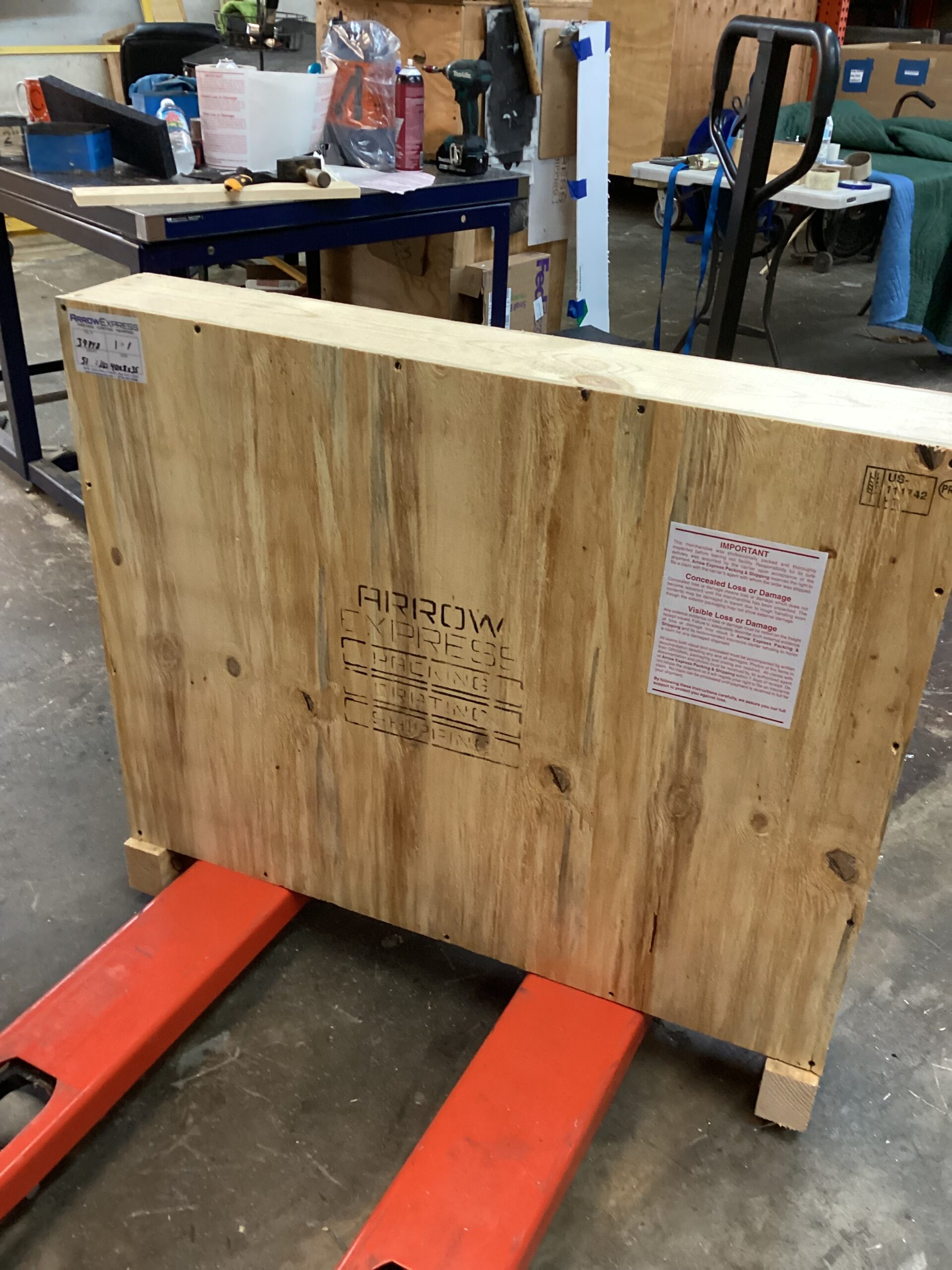
Not every shipment requires a full hardwood enclosure. Knowing when to upgrade from soft packing to a custom built crate is a critical part of risk management.
Soft Packing (using bubble wrap, glassine, and slipcases) is occasionally sufficient for local, dedicated transport where the artwork remains in the hands of a single technician. However, custom shipping crates become mandatory when any of the following risks are present:
Distance Increases
Any artwork moving beyond local, single-crew transport is exposed to sustained vibration and multiple handling points. Items traveling via domestic shipping or international shipping require a rigid shell to survive long-duration vibration and handling by third-party cargo networks.
Value Demands It
High-value works often require custom shipping crates to meet insurance underwriting standards. Even when damage risk appears low, art shipping insurance may require a crate as a condition of All-Risk coverage.
Fragility Is High
Items with complex geometries (chandeliers, sculptures, or oddly-shaped objects that require custom requests) or brittle surfaces (plaster, neon, unglazed ceramic) cannot support their own weight against packing materials. They require the suspension provided by a crate.
When these conditions overlap, custom made wooden crates are the baseline for responsible transport planning.
The Work Behind Custom Wooden Crates
What does a custom engineered wood crate actually do? Well, first and foremost, it creates a suspension system that neutralizes three specific forces: Vibration (road texture), Shock (impact/braking), and Torque (twisting). We address these through a multi-layer construction process.
1. The Structural Shell (Lumber and Plywood)
The outer shell provides the rigid exoskeleton. We fabricate custom wood crates using high-grade plywood and dimensional lumber.
- Plywood Walls: We use furniture-grade plywood for the exterior walls to offer superior puncture resistance.
- Internal Skeleton: The plywood is reinforced with a timber frame. That internal skeleton absorbs stacking weight and strap tension, ensuring that external pressure remains on the frame, never transferring to the artwork inside.
- ISPM-15 Compliance: For all crates destined for international travel, we use heat-treated wood stamped in accordance with ISPM-15 regulations. That ensures compliance with global agricultural standards and prevents border delays.
2. The Internal ‘Float’ (Foam Cushioning)
The “float” is the most critical component. We use specific foam densities to suspend the artwork within the shell, effectively isolating it from the truck’s chassis.
- Ethafoam (Polyethylene): A rigid, closed-cell foam used for heavy objects like bronze sculptures. It absorbs high-impact shock without compressing over time.
- Urethane/Ester Foam: A softer, sponge-like foam used for lightweight or extremely fragile items. It excels at dampening high-frequency road vibration.
3. The Micro-Environment (Liners and Insulation)
The interior of the crate manages the climate. We line custom made wooden crates with thermal insulation boards to slow the rate of temperature change. A thermal buffer helps prevent condensation (sweating) on the artwork’s surface when moving between different environments.
A Closer Look at Custom Crate and Logistics Planning
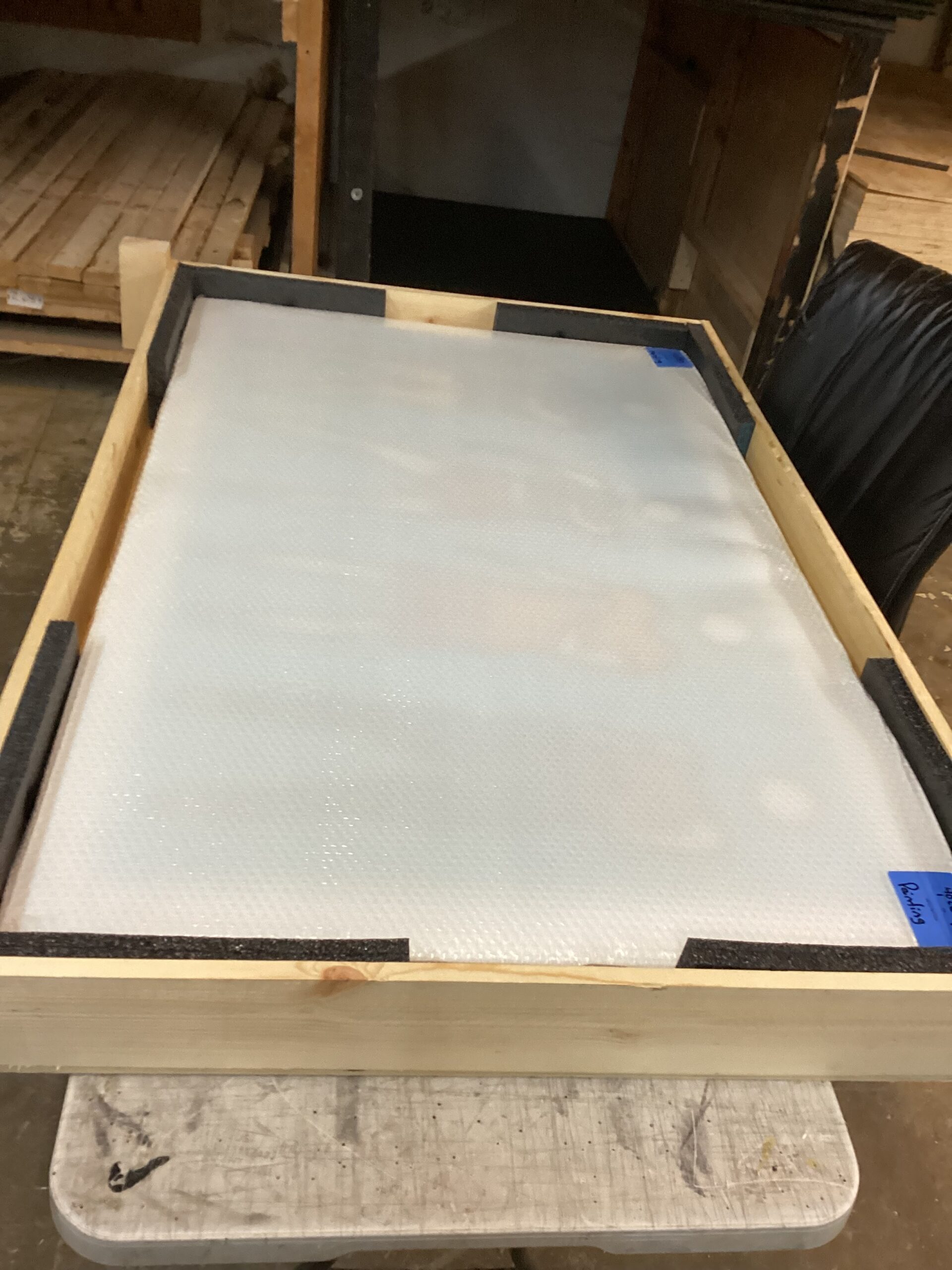
Custom crate and logistics planning ensure that the build specification matches the journey’s risk profile.
- Travel Frames (Local Transport): For local and national collection services within New York City, we often fabricate Travel Frames. These open-faced structures protect the edges of a painting and provide safe handling points without the weight of a full crate.
- Slat Crates (Domestic Transport): For truck transport, Slat Crates offer a rugged solution. These crates feature gaps between the outer wooden slats to reduce weight while maintaining a rigid protective cage.
- Quality Crates (International and High Value): For air freight, we build fully enclosed crates. These feature gasket-sealed lids, waterproofing, and full thermal insulation to withstand the unpredictable conditions of global cargo networks.
Timelines and Reuse of Custom Made Wooden Crates
Building a proper crate takes time. While we can accommodate rush requests, a standard custom engineered wood crate typically requires 3–5 days for fabrication. This allows us to source specific materials, and to ensure precise cuts before the artwork is introduced.
Reusability is a standard feature. We assemble our crates using high-quality screws rather than nails. Screw closures allow the crate to be opened, inspected by customs or registrars, and resealed cleanly without damaging the wood. The design preserves the integrity of the container, allowing clients to reuse the crate for long-term storage or future exhibitions.
We also prioritize resource efficiency. We believe in minimizing our environmental footprint by using every inch of lumber responsibly. Rather than cutting a fresh sheet of plywood for every component, we optimize our yield by integrating high-quality off-cuts into the crate structure.
You might notice this on the face of some crates: a panel may consist of two sections of plywood butt-jointed together, then reinforced by a third structural piece (a batten) layered on top. This technique allows us to use scrap wood to create a bond that’s often stronger than a single sheet, ensuring we don’t waste timber while maintaining the highest standard of protection.
For clients with large collections or tight deadlines, we also offer mobile packing Services, where we can fabricate crates at your location.
The Connection Between Crating and Insurance
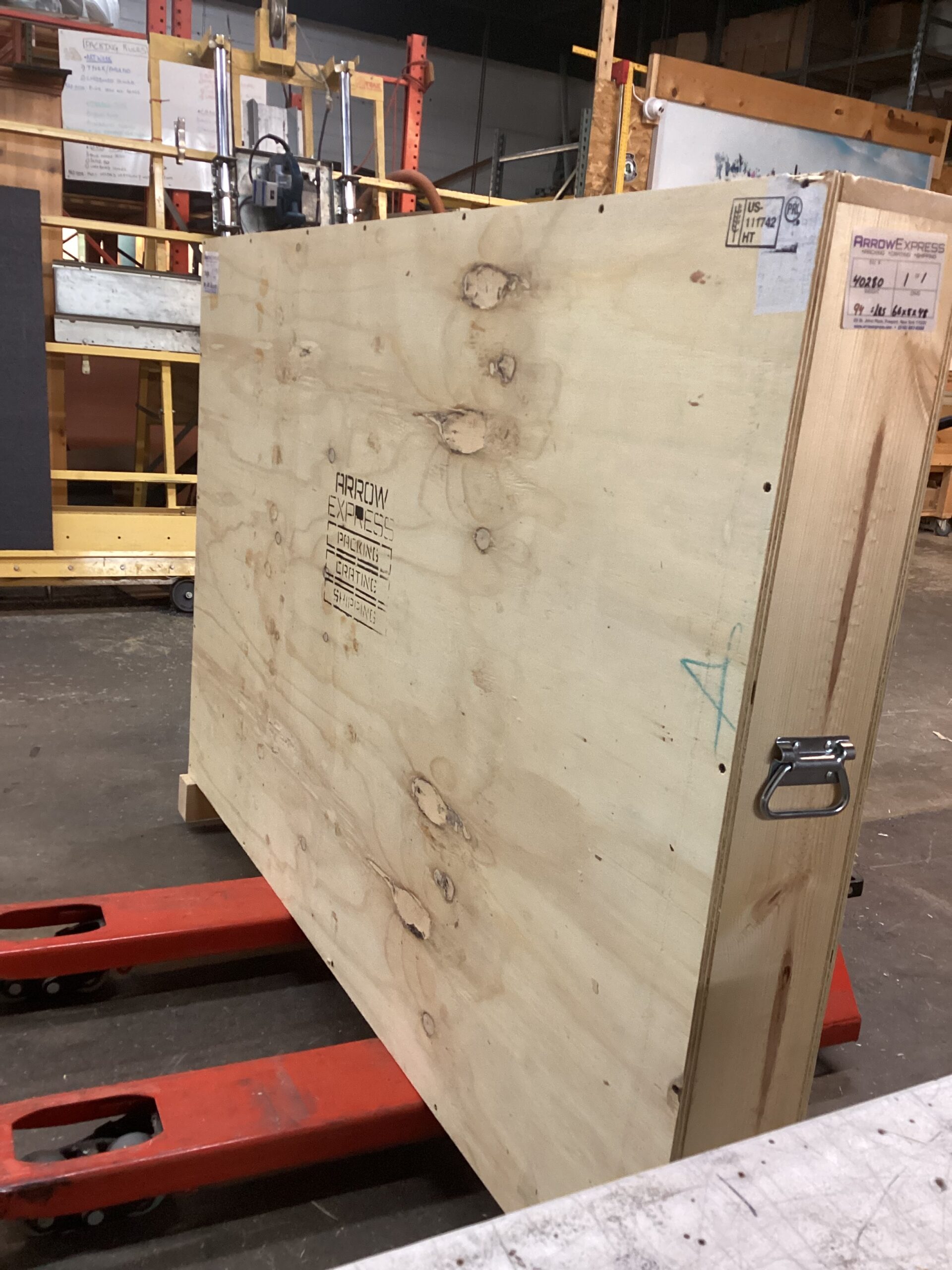
Insurance providers view custom wooden crates as a risk reduction tool. For high-value shipments, underwriters often require a professional crate and a Condition Report as a prerequisite for All-Risk coverage.
Attempting to ship high-value art with insufficient packing or PBO (Packed By Owner) often limits coverage to Total Loss Only. By investing in a professional crate, you secure not only the physical safety of the item but also its financial eligibility for your shipping insurance.
What Factors Influence the Cost of a Custom Crate?
Because every crate is built to order, pricing varies based on the specific engineering required. The primary factors include:
- Internal Complexity: A simple foam-lined box is less labor-intensive than a crate requiring custom-cut, contoured jigs or floating suspension systems.
- Lumber Volume: Larger, heavier works require thicker plywood skins and denser internal bracing, increasing material costs.
- Turnaround Time: Rush fabrication (under 48 hours) often incurs premium fees due to the disruption of the workshop schedule.
- ISPM-15 Treatment: Certified heat-treated wood for international travel carries a slightly higher material cost than standard domestic lumber.
The Arrow Express Standard
In our experience, damage rarely happens because of a bad driver, but because of a bad box. A generic crate forces the artwork to fit the container. A custom built crate fits the artwork.
At Arrow Express, we prioritize preparation. We combine decades of logistics experience with precise carpentry to build enclosures that perform in the real world, ensuring your collection arrives in the exact condition it left.
Article Sources
- USDA Animal and Plant Health Inspection Service (APHIS). Wood Packaging Material. December 27th, 2025.
- National Park Service (NPS). Museum Handbook, Part I: Museum Collections (Chapter 6: Handling, Packing, and Shipping). May 29th, 2025.
- Rochester Institute of Technology. Crate, Crate Preparation, and Packing Materials Questionnaire Report. Accessed February 10th, 2026.