


Shipping framed artwork introduces a different set of risks than most people expect. The frame itself is often the most vulnerable part of the piece, and the way it responds to handling, pressure, and movement depends on how it is supported before it ever leaves the wall.
When people search for how to ship framed artwork, they’re usually thinking about wrapping or protection during transit. In practice, the outcome is determined much earlier. The structure of the frame, the presence of glazing, and the conditions of the route all influence how the piece should be prepared.
Safe art transport depends on aligning those factors before anything is packed or moved. When preparation reflects the real conditions the artwork will face, the shipment becomes controlled from the outset.
Why Framed Artwork Requires a Different Approach to Safe Art Transport
Framed artwork behaves differently under movement because the decorative structure is rarely designed to carry a load. The frame is built to present the work, not to support its weight during lifting, rotation, or transport.
As a result, pressure is often transferred through weak points. Corners, joints, and mouldings can experience stress when a piece is carried through a narrow space or repositioned during handling. These forces are subtle, but they accumulate quickly when the structure is unsupported.
Glazing introduces another variable. Glass and acrylic respond differently to temperature and vibration, and the space between the glazing and the artwork can trap moisture when conditions change. These effects are not always visible during transport, which makes them harder to anticipate without planning.
This is why safe art transport for framed pieces begins with an assessment of structure, materials, and environment. The goal is to understand how the object will behave under real conditions, then prepare it so those conditions do not introduce risk.
For shipments that require controlled handling and preparation, working with fine art shipping services ensures that these factors are addressed before movement begins.
How to Ship Framed Artwork Safely
Shipping framed artwork safely is a matter of preparation, not reaction. The process begins with understanding how the piece is built and how it will be handled from collection through delivery.
The first stage is assessment. Dimensions, weight distribution, frame construction, and surface condition all inform how the artwork should be supported. A framed canvas, a glazed work on paper, and a mixed-media piece each require different approaches.
Preparation follows from that assessment. This may involve stabilizing the artwork with a travel frame, isolating the surface from contact, or designing a crate that supports the piece without transferring pressure through the frame. For higher-risk shipments, onsite packing for artwork ensures that these decisions are executed under controlled conditions.
Transport planning is then aligned with the route. Access points, handling constraints, and environmental changes are factored in before movement begins. This stage determines how the artwork will be carried, positioned, and secured throughout the journey.
When these elements are defined in advance, transport becomes a continuation of the preparation rather than a separate risk.
The Four Technical Considerations in Transporting Framed Artwork
When professionals evaluate a framed piece for transport, they look past the surface. Instead of asking how to wrap the artwork, they ask how the structure will respond to physical and environmental forces. Here are the four technical variables that dictate a safe transport plan.
1. The Risk of the Frame Itself: Torque and Joint Failure

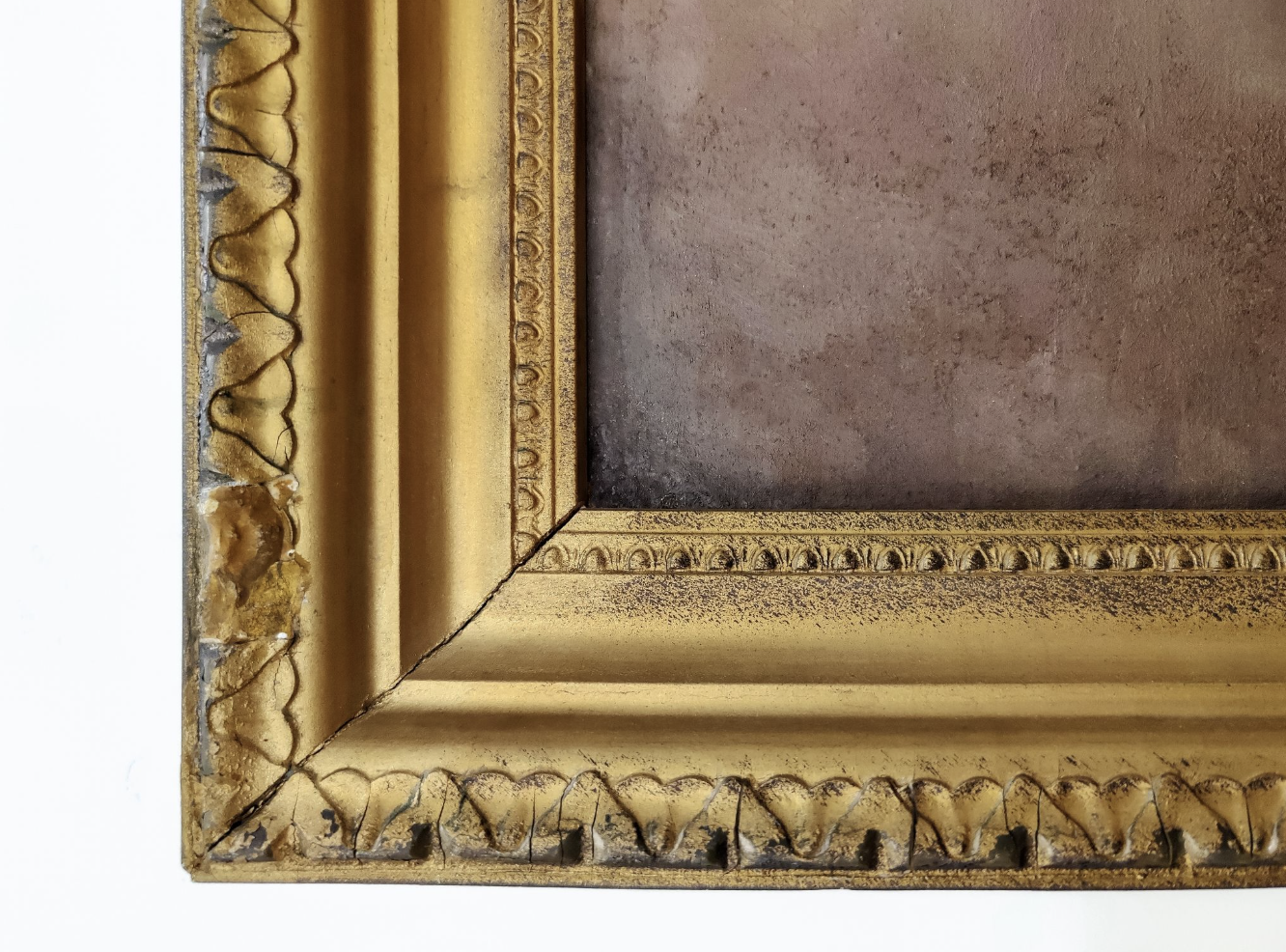
Framed artwork is often lifted by its outer structure, even though that structure is not designed to carry weight. Eventually, frames can become more vulnerable as joints loosen or materials age. When a piece is handled without structural support, stress is transferred directly through these joints.
Torque is introduced when weight shifts unevenly during lifting or movement. This commonly happens when navigating stairs, tight corners, or angled spaces. The frame begins to carry load in directions it was never designed to withstand, which can lead to separation at the corners or distortion of the structure.
To manage this, handlers introduce a secondary support system. Travel frames are used to transfer weight away from the decorative frame and into a stable structure designed for handling. These supports create defined lifting points and reduce the risk of stress being applied to vulnerable areas.
For larger installations or multi-piece movements, this preparation is often carried out through mobile packing services for large collections, where materials, equipment, and structural supports are brought directly to the artwork so stabilization happens before any movement occurs.
This approach allows the artwork to be moved as a controlled object rather than relying on the strength of the frame itself. In more complex scenarios, this preparation is combined with custom crating for fine art, where the entire structure is supported and isolated before transport begins.
The Golden Rule of Framed Art
Most frame damage doesn’t happen in the truck, but during handling. If weight transfers through decorative joints that were never designed to carry a load, the frame will fail. Structural support must be introduced before the artwork is ever lifted.
2. Glazing and Temperature: Managing Condensation Risk
Framed artwork with glazing introduces a different type of risk, one driven by environment rather than handling. Glass and acrylic behave differently under changing conditions, and the space between the glazing and the artwork can become unstable when temperature shifts are not managed.
Standard glass is rigid and more prone to stress under vibration or pressure. Museum glass includes coatings that reduce reflections and UV exposure, but it still responds to temperature changes in similar ways. Acrylic is lighter and more impact-resistant, but it expands and contracts more than glass, which can affect how the artwork is supported within the frame.
These material differences matter most during transitions between environments. A piece that moves from a cold truck into a warm interior, or sits on a loading dock exposed to outdoor conditions, is subject to rapid temperature change. As the air inside the frame adjusts, moisture can form between the glazing and the artwork.
That condensation is not always visible during transport. It can develop slowly and remain trapped within the frame, affecting the surface of the artwork. Works on paper are particularly vulnerable, but any framed piece with a sealed front can be affected if the transition is not controlled.
Managing this risk requires planning for the environment the artwork will move through, not just the materials surrounding it. Handling schedules, staging conditions, and timing all influence how temperature changes are introduced and absorbed.
For shipments where environmental control is critical, fine art shipping services with climate-aware handling ensure that these transitions are managed as part of the overall transport plan.
The Invisible Threat of Condensation
Temperature changes don’t just affect the outside of the crate. Rapid climate shifts on a loading dock can cause condensation to form in the micro-climate between the glazing and the artwork, a risk that remains completely invisible until the crate is opened.
3. Vibration and Foam Density: Why Weight Alone Doesn’t Protect Artwork

When people think about protecting artwork during transport, they often focus on impact. In practice, the more persistent force is vibration. Road movement introduces constant, low-level energy that travels through the vehicle, into the crate, and ultimately, into the artwork if it is not properly isolated.
To transport paintings safely, that energy must be absorbed before it reaches the object. This is where foam density and internal support design become critical.
If the cushioning system is too soft, the artwork can shift or “bottom out” under its own weight, allowing movement within the crate. If the material is too rigid, it fails to absorb vibration and instead transfers that energy directly through the structure. In both cases, the artwork is exposed to stress rather than protected from it.
Effective suspension systems are designed around the specific characteristics of the piece. The weight of the artwork, the dimensions of the crate, and the duration of the journey all influence how the internal supports are engineered. A small framed work moving locally requires a different approach than a large piece traveling across the country or internationally.
This is why professional preparation focuses on calibration rather than volume. The goal is to create a controlled internal environment where movement is absorbed and dissipated before it can affect the artwork.
For higher-risk shipments, this level of control is achieved through custom-engineered wood crates, where internal supports are designed as part of the structure itself. The materials used within those systems are equally important, which is why packing materials designed for fine art transport are selected based on how they respond under sustained load and vibration.
A crate that appears substantial from the outside does not guarantee protection. The effectiveness of the system depends on how it performs internally over time.
Volume vs. Engineering
True protection isn’t about how much padding surrounds an artwork; it’s about calibration. If your internal foam density doesn’t perfectly match the weight of the frame, the crate will transfer road vibration directly into the piece instead of absorbing it.
4. The Access Route: Where Most Damage Actually Happens
The highest-risk stage in transporting framed artwork is rarely the time spent in transit. It is the movement through buildings, where space is limited and handling conditions are less predictable.
Tight freight elevators, walk-ups, narrow turns, and constrained loading areas all introduce pressure points where the artwork must be repositioned or angled to pass through. During these moments, weight shifts quickly and is often transferred through the edges of the frame.
That creates compression risk along mouldings and corners, particularly for larger or heavier pieces. Even slight pressure applied in the wrong place can stress joints or distort the frame structure. These forces are not always visible at the time they occur, but they can affect the stability of the artwork once it is installed.
Improvised handling increases this risk. When access constraints are discovered late, teams are forced to adapt in real time, which can lead to inconsistent lifting points and uneven load distribution.
Access planning removes that uncertainty. By understanding the route in advance, handlers can determine how the artwork will be carried, where support is needed, and whether additional equipment or structural reinforcement is required before arrival.
For collections moving through complex environments, local and nationwide art collection services ensure that access conditions are assessed early and factored into the handling plan from the outset.
Protecting Framed Artwork Requires Engineering, Not Just Packing
Framed pieces fail at their weakest point. That might be the joints, the glazing, or the way weight is handled during movement through tight spaces.
Our team designs travel frames and custom crates based on the structure, weight, and route of each piece, so the artwork is supported before it ever leaves the wall.
What Safe Art Transport Actually Requires

Safe art transport is defined by the decisions made before movement begins. Once a framed piece is in transit, the outcome has already been shaped by how well the artwork was assessed, prepared, and aligned to the conditions it will encounter.
The process starts with assessment. That includes understanding the structure of the frame, the presence of glazing, the weight distribution of the piece, and any existing vulnerabilities. A formal condition report in fine art shipping establishes a clear baseline before the artwork is handled, documenting its state and identifying areas that require additional protection.
Preparation follows directly from that assessment. Structural support systems, packing methods, and crate design are selected based on the artwork itself, the environment it will move through, and the route it will take. A piece traveling locally through controlled conditions requires a different approach than one moving across regions or internationally.
Responsibility is then defined across each stage of the shipment. From collection to delivery, there should be clarity around who is handling the artwork, how it is being transferred, and what conditions are expected at each handoff. This reduces variation and keeps the process aligned from start to finish.
Handling remains controlled throughout the process. Movements are planned in advance, lifting points are defined, and adjustments are made with full awareness of how the artwork is supported. This avoids reactive decisions during the moments when the artwork is most exposed.
For shipments within the country, shipping art domestically with trained handlers ensures that preparation and handling remain consistent across the route. For cross-border movements, international fine art shipping coordination extends that same level of control through customs, transit, and final delivery.
Safe art transport is the result of a system that remains consistent from planning through to placement.
Common Mistakes When Shipping Framed Artwork
Most issues in framed painting shipping come from small assumptions made early in the process that carry through into handling, packing, and transport. Slowly, these patterns repeat across different types of artwork and environments.
One of the most common is lifting the piece by the frame itself. That places the load directly through joints that were not designed to carry weight, especially in older or decorative frames. The damage may not be immediate, but structural stress accumulates with each movement.
Another pattern is treating padding as protection. Adding layers of material around a framed piece can give the impression of safety, but without structural support, those materials do little to control how the artwork responds to movement. In some cases, they increase pressure on vulnerable areas.
Glazing risk is often overlooked. Standard glass, museum glass, and acrylic each respond differently to vibration and temperature change. When this is not accounted for, condensation or internal stress can develop within the frame, affecting the artwork over time.
Access conditions are frequently underestimated. When stairwells, elevators, or loading areas are not assessed in advance, handling becomes reactive. This introduces uneven lifting, shifting pressure, and increased risk at the edges of the frame.
There is also a tendency to treat all framed pieces the same. In reality, each artwork behaves differently based on its size, materials, age, and construction. Approaches that work for one piece may introduce risk for another.
These patterns appear regularly when safely shipping framed art is approached as a matter of care rather than structure. When preparation is aligned with how the artwork is built and how it will move through real environments, these risks can be addressed before they develop into damage.
How Arrow Express Approaches Framed Painting Shipping
Framed painting shipping begins with understanding how the artwork is built and how it will move through its environment. Each piece is assessed in context, with attention to structure, glazing, weight distribution, and the conditions it will encounter from collection through delivery.
Preparation is driven by that assessment. Structural support is introduced before movement begins, whether through travel frames, reinforced packing systems, or custom crating for fine art, designed to stabilize the artwork and isolate it from external forces. The objective is to ensure that the frame does not carry load during handling or transport.
Packing is then aligned to the specifics of the shipment. The approach reflects the object itself, the route it will travel, and the environments it will pass through. A locally coordinated move requires a different level of intervention than a multi-stage or long-distance shipment, but the underlying principle remains consistent: preparation determines outcome.
Communication supports each stage of the process. Scope, access conditions, and shipping timelines are established early, and responsibility remains clear as the artwork moves through collection, transport, and delivery. Continuity reduces variation and ensures that decisions made during planning are carried through in execution.
For clients requiring a structured, assessment-led approach, fine art shipping services provide the framework to manage these variables from the outset. Where movement spans regions or requires coordinated routing, shipping art domestically with trained teams ensures that preparation and handling remain consistent throughout the journey.
A Controlled Process Reduces Risk Before It Appears
Risk in framed artwork is introduced long before the piece is in transit. It begins at the point where assumptions replace assessment, and where preparation is based on convenience rather than structure.
Once movement starts, there is a limited opportunity to correct those early decisions. The way the artwork is supported, how it responds to handling, and how it transitions between environments have already been defined.
Framed pieces require structural thinking at every stage. The frame, glazing, and internal support system must be considered together, with preparation aligned to the conditions the artwork will actually face. Careful handling matters, but it is only effective when the structure behind it has been established in advance.
If you’re asking how to ship framed artwork safely, the more relevant question is how much control exists in the process before movement begins.
If you’re planning to move a framed piece and want clarity on preparation, handling, and transport conditions, start with a structured plan.
Article Sources
- American Institute for Conservation (AIC). Caring for Your Treasures. Accessed March 23rd, 2026.
- Canadian Conservation Institute (CCI). Features of Effective Packaging and Transport for Artwork. Accessed March 23rd, 2026.
- Canadian Conservation Institute (CCI). Glazing Materials for Framing Works on Paper. Accessed March 23rd, 2026.
- Smithsonian Institution Museum Conservation Institute. Art in Transit: Handbook for Packing and Transporting Paintings. Accessed March 23rd, 2026.